Off-the-shelf or custom CRM: how to make the right decision
Compare off-the-shelf and custom CRM based on cost, time, integrations, ownership and implementation risk.
By Η ομάδα της Argonstack, TechIns Group
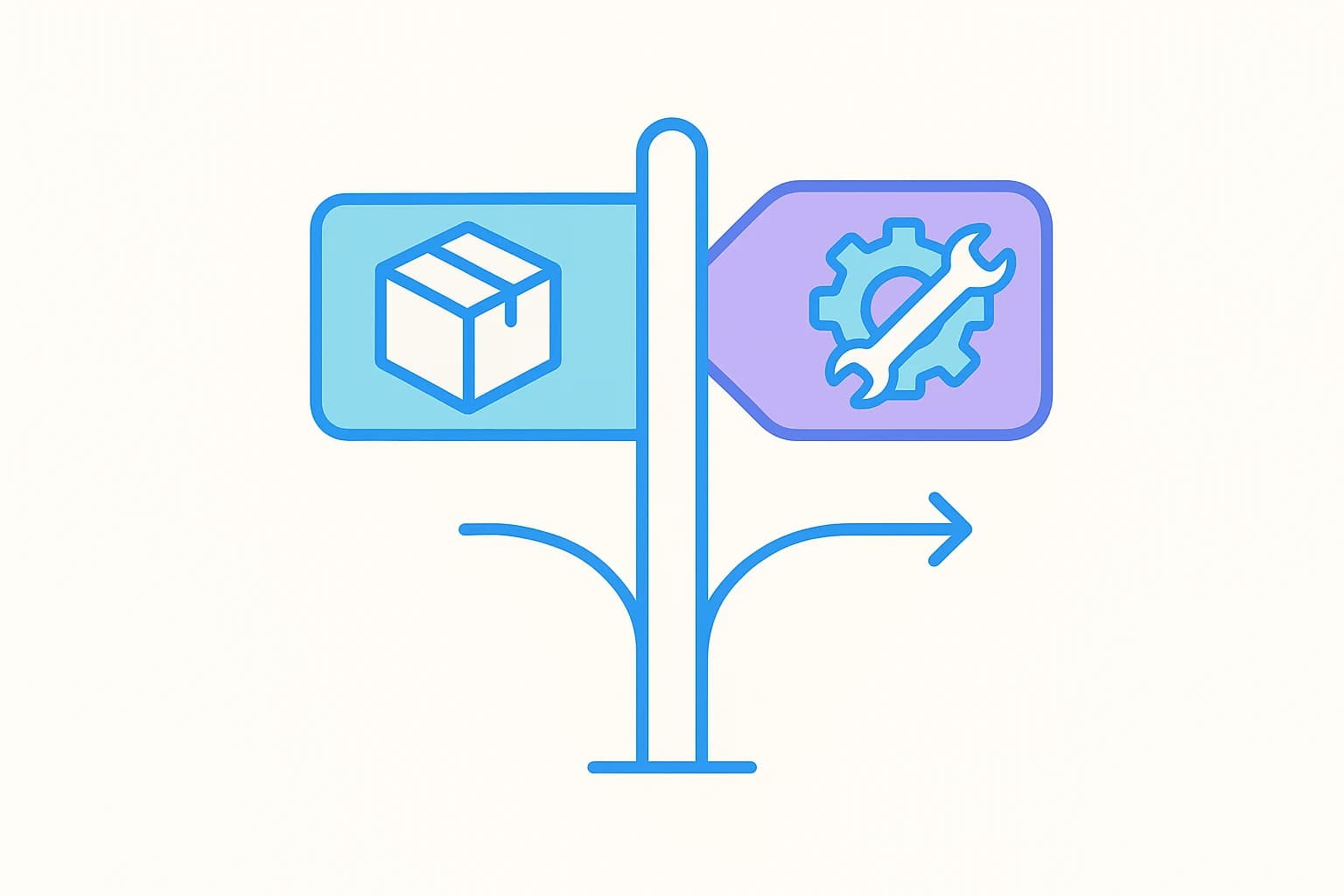
The choice between an off-the-shelf and a custom CRM is not a technical preference. It is a business decision about where it makes sense for the company to adapt itself and where it makes sense to invest in its own software.
An off-the-shelf CRM offers speed, proven functionality and lower initial risk. A custom CRM can capture specific processes and create an advantage, but it requires a larger investment, clear product ownership and ongoing maintenance. The right choice depends on the operational specificity of the business, not on how impressive each solution sounds.
What an off-the-shelf CRM is
An off-the-shelf Argonstack CRM is a product used by many businesses that offers common functionality such as contacts, pipeline, tasks, campaigns, reports and automations. The business configures the system without building the core from scratch.
This option is suitable when the sales process can be described in clear stages, when most needs are covered by existing functionality, and when a fast start is the priority. It is also a strong choice for organizations that do not want to take on the maintenance cost of their own product.
What a custom CRM is
A custom CRM is designed specifically for the operations of a particular business. It can incorporate unique rules for pricing, approvals, production, service, procurement or third-party collaboration.
The custom approach makes sense when the process is part of the company's competitive value and cannot be adapted to an off-the-shelf tool without serious losses. It also makes sense when the CRM needs to function as a central layer between ERP systems, customer applications, portals and specialized data.
Five decision criteria
1. How unique the process is
If the company manages leads, appointments, quotes and follow-up in a relatively standard way, the off-the-shelf solution is probably enough. But if the process involves complex rules that directly affect the product or profit margin, custom development may be justified.
2. How quickly it needs to launch
An off-the-shelf CRM can be put into operation faster, provided the scope stays controlled. A custom CRM requires discovery, design, development, testing and a gradual transition. If the business needs immediate organization, it is risky to wait months for a perfect future solution.
3. What the total cost of ownership is
In the off-the-shelf solution, cost includes subscriptions, configuration and possible additional services. In the custom solution, it includes analysis, development, hosting, monitoring, security, fixes, upgrades and technical support. The comparison should be made over a horizon of at least three years. See also how CRM cost in Greece is structured.
4. What integrations are required
If the necessary connections already exist, the off-the-shelf solution gains a significant advantage. If many special connections are required and the provider imposes technical constraints, a custom architecture may offer greater control.
5. Who will be responsible for the product
A custom CRM needs an owner within the business. Someone must decide priorities, approve workflows, evaluate changes and maintain scope. Without this role, development turns into a series of fragmented requests.
The hybrid option
Many businesses don't need to choose absolutely between the two solutions. They can use an off-the-shelf CRM core and develop specific modules, portals or integrations around it. This way they retain the speed and stability of the product while investing only in the areas that create real differentiation.
The hybrid solution is often the best balance of performance and risk. However, it requires clean architecture and clear boundaries between the product, the extensions and the data.
The most common mistakes
The first mistake is custom development because "our company is different," without proving which specific process actually creates value. The second is buying a large off-the-shelf CRM and trying to activate all its features at once. The third is deciding based only on the initial price. The fourth is overlooking data export and the risk of provider lock-in.
A practical rule of thumb
Start with an off-the-shelf CRM when it covers most of the critical needs and can connect with the core systems. Choose custom development when the specific process is genuinely strategic, has clear economic value and there is an internal owner. Choose a hybrid model when you need a fast core system and limited specialized capabilities.
Argonstack offers both an off-the-shelf CRM and custom development services. This allows the choice to start from the business problem rather than the need to promote a single technical approach. When the decision is made later, the CRM migration checklist shows how to transition without losses.
Next step
You don't need to decide based on technical intuition. We map out the process and recommend an off-the-shelf, custom or hybrid approach.
Frequently asked questions
Is a custom CRM always more expensive?
At the start, usually yes. Over time it can make economic sense when it replaces many licenses, supports a critical proprietary process, or significantly reduces operating costs. This should be demonstrated with a business case.
Can I start with an off-the-shelf CRM and switch later?
Yes, as long as clean data export is possible and unnecessary dependencies are avoided. Correct data structure from day one makes future migration easier.
When is a custom CRM a bad idea?
When requirements are not clear, there is no internal owner, the available budget covers only the first version, or the needs can be met with simple configuration.